Reliable Seawall Solutions for Florida's Gulf Coast
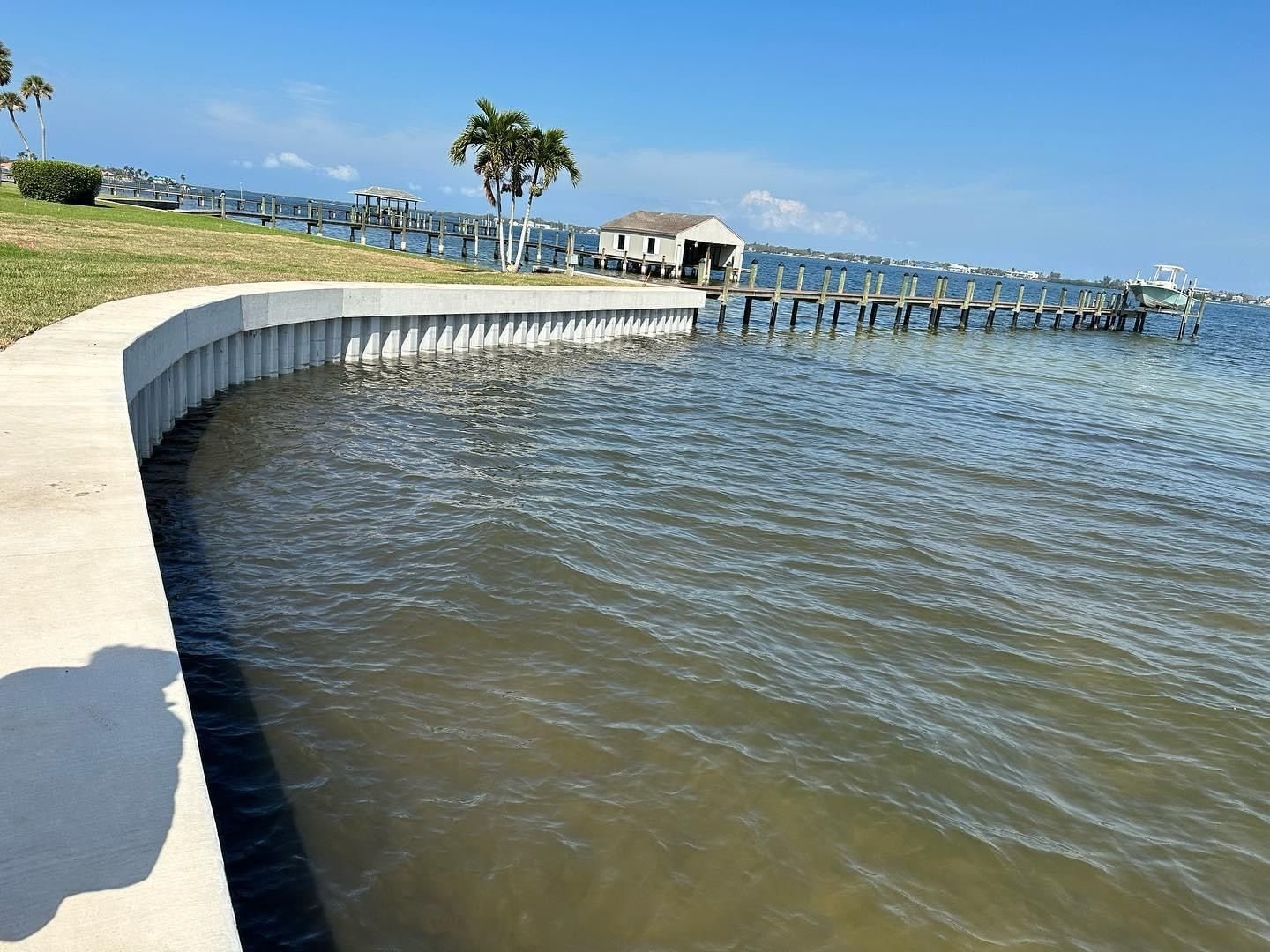
Anderson Dock & Lift Co provides seawall services in Bradenton and across Florida’s Gulf Coast. Our team of fully insured marine-licensed contractors brings over 60 years of combined experience to every project. As proud members of the Florida Marine Contractors Association and the Seawall Repair Network, we consistently deliver top-quality solutions that meet industry standards.
Anderson Dock & Lift was founded by Pete Anderson, a combat veteran who served 24 years as an Army and Air Force officer and holds Florida Certified Specialty Contractor license SCC131152520.
As a veteran-owned and operated business, we prioritize integrity, hard work, and precision. We provide competitive rates and financing options to ensure your seawall project is both accessible and affordable. We also offer free estimates within 24 business hours, so you can start your project without delay. Contact us today to experience the Anderson Dock & Lift advantage.
Commercial and marina projects are a different specification, not just a longer wall. A residential seawall holds back soil and takes wave energy. A commercial wall does that and then carries what is built on top of it: dining decks, public walkways, service access, and in a marina, the dockage and the vessels tied to it. The schedule matters as much as the structure, because the property has to keep earning while the work runs. Anderson built approximately 900 linear feet of seawall, dock, and pilings on the Cortez waterfront as contractor of record, and the restaurant sitting on top of it stayed open throughout. If you are pricing a commercial project, see commercial seawall construction.
Why Choose Anderson Dock & Lift Co.
- Fast, Free Estimates
- Fully Insured
- High-Quality Products
- Veteran-Owned
New Seawall Construction
A new seawall is the right call when a waterfront lot has never had one, or when the structure standing there has moved past what patching can hold. We start with the site rather than a catalog. Soil type, water depth, wave exposure, and wake from passing vessels all change what the wall has to carry, and two properties on the same canal can need different builds. Our crew walks the shoreline, takes measurements, and recommends a wall that matches those conditions and the way you use the water.
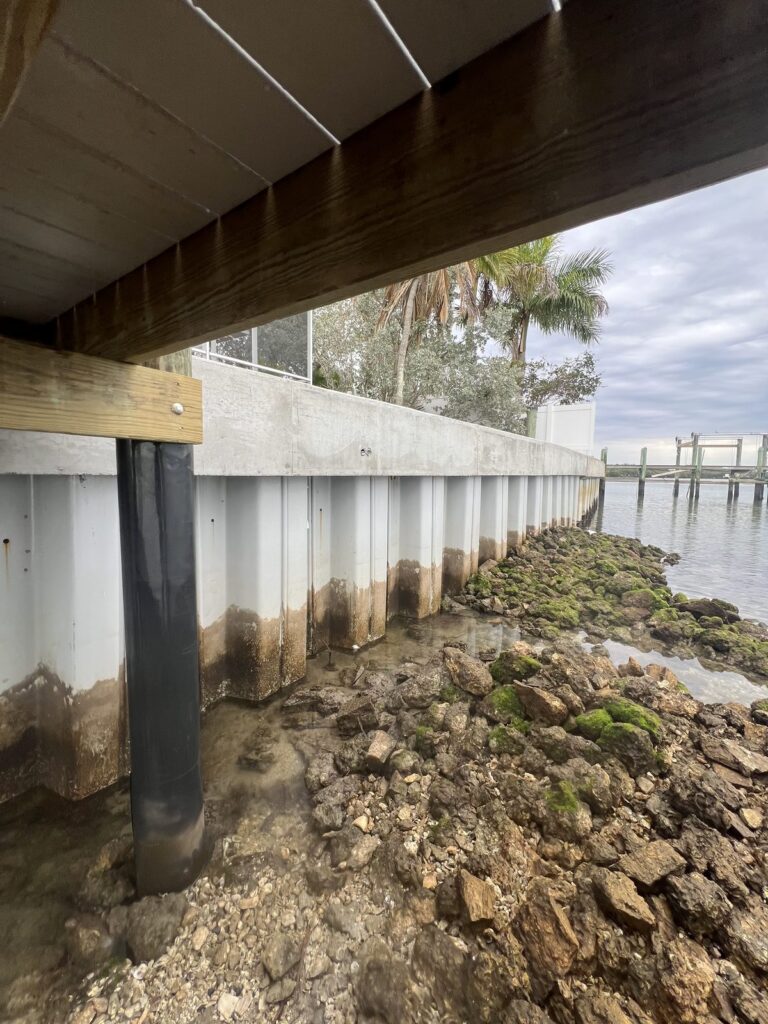
- Vinyl sheet pile seawalls
- Concrete seawalls
- Riprap installations
- Seawall cap replacements
- Tieback systems
- Drainage solutions
Vinyl sheet piling is common on Florida residential shorelines because it does not rot, rust, or feed wood-boring organisms, and it gives a clean face at the waterline. Concrete panels carry more structural mass and suit stretches that take heavier loading. Riprap uses natural stone at the toe of the wall to absorb wave energy and give marine life somewhere to settle. The cap, the tiebacks, and the drainage are part of the same system: the cap ties the panels together across the top, the tiebacks anchor the wall back into stable soil behind it, and drainage relieves the water pressure that builds behind a wall after heavy rain. The anchor hardware is buried and permanent, which is exactly why its specification matters: the American Galvanizers Association classes any structure within 250 feet of salt water as sitting in the marine splash and heavy salt spray zone, an exposure it calls aggressive to hot dip galvanized steel. Every seawall on this coast is inside that band by definition. Hardware you will never see again is the last place to save money.
We also design to the water level the wall will face late in its life, not the one it is built to. NOAA’s tide gauge at St. Petersburg, the nearest long-record station to this stretch of coast, puts the relative sea level trend at 3.13 millimeters a year from 1947 through 2025, which the agency states as 1.03 feet per century. A seawall built today is expected to still be working decades from now, so cap height, tieback depth and drainage get specified against where the water is going rather than where it is this morning. A wall designed only to today’s waterline is a wall that gets topped.
Permitting is part of the job, not something we hand back to you. We manage local, state, and federal permits so the finished wall complies with coastal rules. Construction runs from layout and removal of the failing structure through panel installation, tieback placement, backfill, and the poured cap, with drainage set before the backfill goes in. Our contractors are marine licensed and fully insured, the owners stay involved on the projects we take, and we quote new seawall work with financing options and a free estimate within 24 business hours.
Repair is usually the better value when the damage is contained: a cracked panel or two, one failed anchor, a short run of cap. Replacement starts to make more sense when panels bow along most of the run, when the cap has separated in several places, or when soil keeps washing out behind a wall that has already been patched. A waterfront inspection is how you tell those two situations apart before you spend anything, and seawall repairs or seawall tiebacks can add years to a wall whose panels are still sound. A new wall is also the moment to plan for what sits on it, since docks and boat lifts are easier to tie in while the cap is still being formed.
Once a wall is in, upkeep is what keeps it there. Our guide on how to maintain a Florida seawall covers what to watch for between inspections and which small findings are worth a call before they turn structural.
Storm season is the test. Our hurricane guide covers what to check on a seawall before June and what to do in the first 72 hours after a storm.
Seawall Services
Reviews
4.8 stars across Google reviews from waterfront owners on Florida’s Gulf Coast. Read what they said.
See Our Work
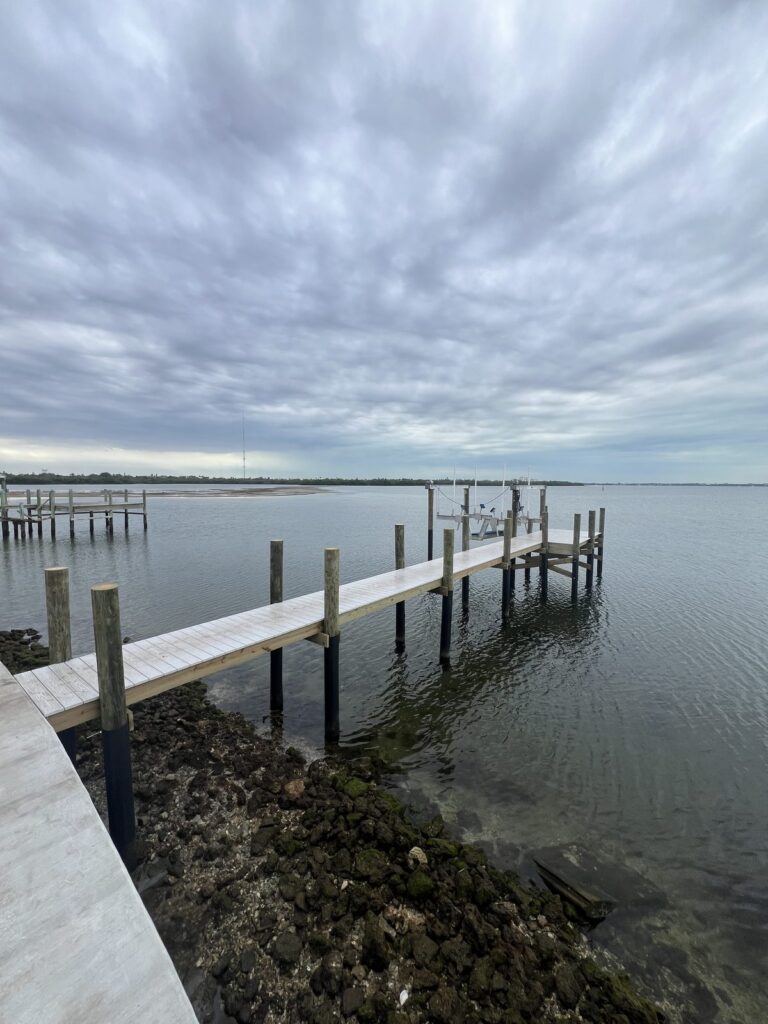
Photos of docks, lifts, seawalls and retaining walls we have built along this coast are in the portfolio.
Seawall Installation in Progress
Crew, crane and barge setting seawall panels along a Gulf Coast shoreline.
Frequently Asked Questions
How do seawalls protect my waterfront property from erosion and damage?
Seawalls act as a protective shield between your shoreline and constant water movement. Over time, waves, tides, storms, and fluctuating water levels can gradually erode the soil along your waterfront, weakening land stability and threatening nearby structures. A properly constructed seawall absorbs and redirects the force of the water, helping prevent erosion, land loss, and structural damage. That is why working with reliable seawall companies in Bradenton, FL is so important, because professional design and installation truly make a difference in long-term shoreline protection.
Why are seawalls especially important along Florida’s Gulf Coast?
Florida’s Gulf Coast experiences harsh marine conditions, including saltwater exposure, strong winds, heavy rainfall, hurricanes, and changing tides. These constant environmental pressures can rapidly deteriorate unprotected shorelines. Seawalls create stability, protect your property investment, and help maintain land integrity even in challenging weather. Experienced seawall companies on Florida’s Gulf Coast understand the unique coastal challenges of this region and design structures built to withstand them.
What types of seawalls does Anderson Dock & Lift Co install?
We install a variety of seawall systems, including vinyl, composite, and concrete seawalls, along with other durable marine-grade solutions. Each type is chosen based on environmental conditions, shoreline needs, soil composition, and property layout. Our goal is to provide strong, long-lasting protection while also ensuring structural reliability. As one of the reliable seawall companies in Bradenton, we carefully match the right seawall to each property’s needs.
How do you determine which seawall design is right for my property?
Every project begins with a detailed assessment of your shoreline. Our team evaluates soil conditions, erosion patterns, water pressure, elevation, and environmental exposure. We also consider the type of structure being protected and how water interacts with your property. This careful evaluation allows us to design a seawall that delivers maximum stability, durability, and long-term performance. Choosing knowledgeable seawall companies along Florida’s Gulf Coast ensures this level of engineering precision.
How long does a professionally built seawall typically last?
When constructed using high-quality materials and expert techniques, seawalls can last for decades. Lifespan depends on maintenance, environmental exposure, and construction quality, which is why working with experienced professionals is essential. Our team uses durable products and proven marine construction practices to build seawalls that stand strong year after year. Many property owners rely on established seawall companies in Manatee County to ensure long-lasting results.
Do seawalls add value to my property in addition to protection?
Yes, seawalls are both a protective structure and a valuable investment. By preventing erosion and preserving your land, they help maintain property value over time. A well-built seawall also improves safety, enhances shoreline stability, and can make waterfront properties more appealing to future buyers. Many homeowners specifically look for properties with professionally built seawalls, making experienced seawall companies on the Gulf Coast an important resource for long-term value.
What are some signs that my existing seawall may need attention?
Common warning signs include visible cracks, leaning sections, sinking ground near the wall, soil erosion behind the wall, exposed rebar, rust stains, bulging panels, or separations between wall segments. If you notice water pooling or soil washing away, this can also indicate weakening structural stability. Early inspections help prevent bigger issues later, which is why many homeowners contact seawall companies in Bradenton, FL when they see these warning signs.
Can damaged seawalls be repaired, or do they always need replacement?
Not every damaged seawall requires full replacement. Depending on the condition, many seawalls can be stabilized and restored with professional repairs, reinforcement systems, tiebacks, and modern strengthening techniques. Our team carefully evaluates each structure to determine whether repair or replacement is the most effective and cost-efficient solution. Reliable seawall companies across Florida’s Gulf Coast will always recommend the option that best protects your property long-term.
How do seawall inspections work?
Seawall inspections usually start with a straightforward visual review of the shoreline structure, looking for anything that seems out of place or changed over time. This can include shifts in alignment, surface wear, or subtle signs of soil movement behind the wall. Many property owners like to think of it as a routine check-in with the shoreline rather than something overly technical, especially since small observations can help build a clearer picture over time.For a more complete understanding, a closer, hands-on evaluation can be done to look at conditions that are not always visible from a distance. This is where experience really helps, since patterns of wear along waterfront structures can be gradual and easy to overlook. Working with one of the top seawall companies in Bradenton, FL can help guide how often these inspections should happen based on the specific conditions around your property.
What affects seawall longevity most?
A seawall's lifespan is influenced by a mix of environmental exposure, material selection, and how consistently it is maintained over time. Constant contact with water movement, shifting tides, and seasonal weather changes can slowly add stress to the structure. Even small variations in soil stability behind the wall can play a role in how evenly that pressure is distributed.
Recent Blog Posts
- Bulging, Bowing, and Washouts: Diagnosing Waterfront Retaining Wall Repair Needs
- 3 Ways Retaining Walls Add Long-Term Value to Outdoor Spaces
- The Biggest Benefits of Adding a Retaining Wall to Your Landscape
- The Importance of Timely Seawall Repair for Waterfront Homes
- Why Cookie-Cutter Fails: Tailoring Custom Boat Docks to Your Watercraft
- Choosing the Right Type of Dock for Your Property